Why Choose Riverside?
Riverside combines established neighborhoods with a busy downtown and growing suburban areas. Additionally, the city has strong cultural and educational resources.
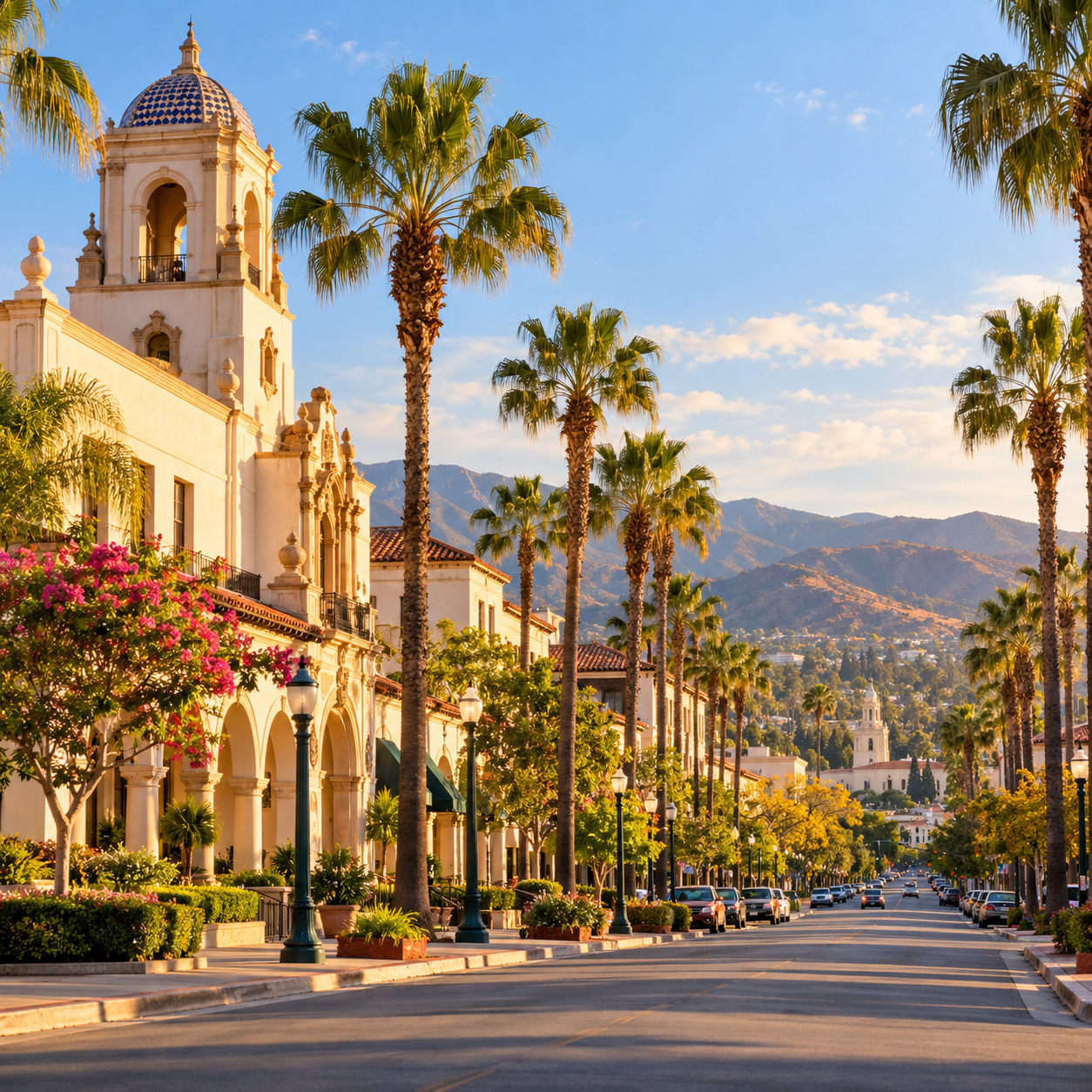
Downtown features historic architecture, restaurants, museums, and entertainment. Meanwhile, neighborhoods farther south and east provide more suburban settings.
Cost of Living
Housing represents a major part of a Riverside relocation budget. The 2020–2024 median owner-occupied home value was $584,800.
Meanwhile, median gross rent was $1,914. Therefore, movers should compare housing, transportation, utilities, and insurance carefully.
Real Estate and Housing Market
Riverside offers single-family homes, apartments, condominiums, townhomes, and established historic properties.
Housing styles vary significantly between neighborhoods. Before buying, compare commute routes, property condition, taxes, and nearby services.
Additionally, hillside locations may create different insurance and maintenance considerations.
Education
Riverside Unified School District serves a large portion of the city. The district includes elementary, middle, high, specialty, and alternative schools.
Families can use the district’s school locator to check current neighborhood assignments. Therefore, confirming boundaries before moving is important.
The University of California, Riverside also provides major higher education, research, and cultural opportunities.
Healthcare Facilities
Riverside Community Hospital is one of the city’s major medical centers. Its services include emergency care, cancer treatment, cardiac care, and a Level I Trauma Center.
Additional clinics and specialty providers operate throughout Riverside. As a result, residents have access to both routine and advanced medical care.
Recreation and Leisure
Riverside’s park system includes nearly 3,000 acres of parkland. The city currently lists 49 developed parks and six natural or wilderness parks.
Mount Rubidoux is another popular outdoor destination. Its paved 3.2-mile loop provides walking, cycling, and panoramic city views.
Meanwhile, recreation programs include sports, aquatics, community activities, and family programs.
Dining and Shopping
Downtown Riverside offers restaurants, cafes, shops, museums, and local services. The Downtown Partnership maintains directories for both dining and retail businesses.
Additionally, the Main Street pedestrian area provides a walkable setting near historic buildings and local businesses.
Larger commercial areas elsewhere in Riverside provide supermarkets, shopping centers, and everyday services.
Events and Festivals
Riverside hosts concerts, arts events, markets, community activities, and seasonal celebrations throughout the year. Downtown maintains an active public event calendar.
The Mission Inn Festival of Lights is one of the city’s best-known traditions. The 2026 celebration runs from November 21 through December 31.
Additionally, museums and cultural organizations provide year-round programming.
Transportation and Accessibility
Riverside Transit Agency provides local and regional bus service throughout the area. Numerous routes connect downtown with neighborhoods, shopping centers, universities, and nearby cities.
Metrolink also serves Riverside-Downtown Station. The station connects with the Riverside, 91/Perris Valley, and Inland Empire–Orange County lines.
Driving remains common for regional travel. However, rail and bus services give some residents useful alternatives to daily car travel.
Conclusion
Riverside combines housing variety, healthcare, education, parks, dining, and Southern California transportation access.
Before relocating, compare housing costs, school boundaries, commute routes, insurance, and neighborhood amenities. Overall, Riverside offers Inland Empire living with strong regional connections.